Airport History
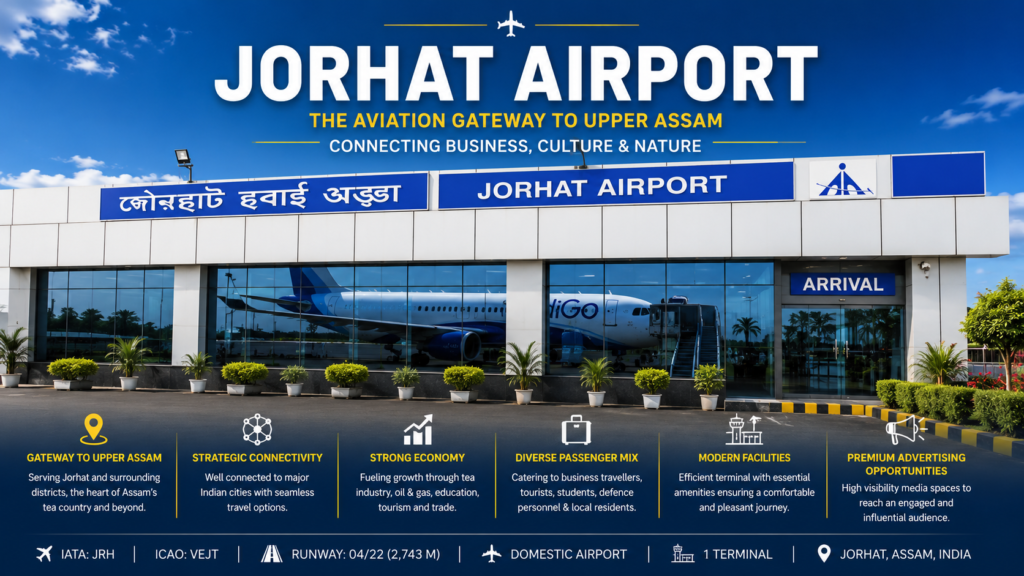
Jorhat Airport, also known as Rowriah Airport, is one of the oldest airports in Northeast India and serves as an important regional aviation hub in Assam. Located approximately 7 kilometres southwest of Jorhat city, the airport has historically played a significant role in connecting Upper Assam with the rest of the country.
The airport was originally established during the Second World War as a military airfield due to its strategic location in the eastern region of India. Following the war and India’s independence, the facility was gradually adapted for civil aviation while continuing to support defence operations. Over the decades, the Airports Authority of India (AAI) has upgraded the airport’s infrastructure to accommodate increasing passenger traffic and enhance operational efficiency.
Jorhat Airport functions as a civil enclave within the Indian Air Force’s Rowriah Air Force Station, requiring close coordination between civilian and military aviation authorities. Today, the airport plays a crucial role in supporting tourism, the tea industry, oil and natural gas operations, education, healthcare, and regional economic development across Upper Assam.
Airport Overview
Jorhat Airport is a domestic airport operated by the Airports Authority of India and serves the city of Jorhat, one of Assam’s major educational, cultural, and commercial centres. Strategically located in Upper Assam, the airport provides essential connectivity for passengers travelling to and from the tea-growing regions of Assam and neighbouring districts.
The airport offers scheduled domestic flights connecting Jorhat with major cities such as Kolkata, Delhi, Guwahati, and Bengaluru through leading Indian airlines. It serves a diverse passenger base comprising business executives, government officials, defence personnel, students, tourists, healthcare travellers, and local residents.
Its proximity to world-renowned tea estates, Majuli River Island, Kaziranga National Park, and various heritage destinations makes the airport an important gateway for tourism in Upper Assam. As regional connectivity continues to improve under national aviation initiatives, Jorhat Airport is expected to witness steady passenger growth while supporting the economic aspirations of the region.
Airport Snapshot
| Parameter | Details |
| Airport Name | Jorhat Airport (Rowriah Airport) |
| IATA Code | JRH |
| ICAO Code | VEJT |
| Airport Type | Domestic Airport (Civil Enclave) |
| Owner | Airports Authority of India |
| Operator | Airports Authority of India (AAI) |
| Location | Jorhat, Assam |
| Elevation | Approximately 95 metres (311 ft) |
| Passenger Terminals | 1 |
| Runways | 1 |
| Runway Number | 04/22 |
| Runway Length | Approximately 2,743 metres |
| Runway Surface | Asphalt |
| Commercial Operations | Scheduled Domestic Services |
| Primary Catchment | Jorhat, Majuli, Upper Assam and adjoining districts |
| Major Airlines | IndiGo, Alliance Air |
Market Intelligence
Jorhat Airport serves as one of the key regional airports in Assam and acts as an important aviation gateway for Upper Assam. The airport supports a broad spectrum of passenger movement driven by the region’s tea industry, oil and gas sector, educational institutions, government administration, defence establishments, tourism, and healthcare services. Its strategic location enables efficient access to several economically significant districts, making it an important contributor to regional development and connectivity.
Business travel constitutes a significant share of passenger traffic, particularly from executives associated with Assam’s globally renowned tea industry, petroleum and natural gas companies, banking institutions, and government organisations. The airport also facilitates regular travel by defence personnel due to its shared infrastructure with the Indian Air Force. In addition, students, healthcare travellers, and local residents rely on the airport for convenient access to major Indian cities.
Tourism continues to strengthen the airport’s passenger base. Jorhat serves as the gateway to Majuli, the world’s largest inhabited river island and a UNESCO World Heritage nominee, known for its Vaishnavite monasteries, cultural heritage, and ecological significance. Visitors also use Jorhat Airport to access Kaziranga National Park, tea estates, Sivasagar’s Ahom monuments, Dibru-Saikhowa National Park, and various eco-tourism destinations across Upper Assam. Government initiatives promoting heritage tourism and eco-tourism are expected to contribute to sustained passenger growth.
From a commercial perspective, Jorhat Airport presents promising opportunities for airport advertising and passenger engagement. Although passenger volumes remain moderate compared to larger airports, the airport serves a high-value audience comprising business executives, government officials, affluent tourists, students, and professionals. The controlled airport environment, extended passenger dwell times, and limited media clutter create an effective platform for advertising. Industries such as banking, automobiles, consumer goods, hospitality, tourism, education, healthcare, telecommunications, and public sector enterprises can benefit from strong brand visibility and audience engagement.
SirriS Intelligence Summary
From the SirriS perspective, Jorhat Airport is classified as a Strategic Regional Airport with strong economic relevance in Northeast India’s aviation network. Its role extends beyond passenger transportation, supporting the tea industry, oil and gas sector, defence operations, tourism, education, and government administration across Upper Assam.
The airport benefits from a stable and diversified passenger base, ensuring consistent demand throughout the year. Continued investments in regional connectivity, tourism infrastructure, and economic development are expected to strengthen the airport’s long-term growth trajectory. Improvements in airline connectivity and airport infrastructure will further enhance its position as a regional aviation hub.
For the Out-of-Home (OOH) advertising industry, Jorhat Airport offers an attractive niche market with access to influential and high-value passenger segments. The airport provides advertisers with an opportunity to engage business leaders, government officials, tourists, students, and local residents in a premium, uncluttered environment where brand visibility and recall are significantly enhanced. As tourism and regional commerce continue to expand, demand for airport media and commercial concessions is expected to grow steadily.
Overall, Jorhat Airport represents a high-potential regional aviation asset with a balanced mix of business, tourism, and government travel. Its strategic location, strong regional economy, growing tourism sector, and reliable passenger demand make it an important airport for aviation stakeholders, airport media operators, concessionaires, and businesses seeking long-term opportunities in Northeast India.