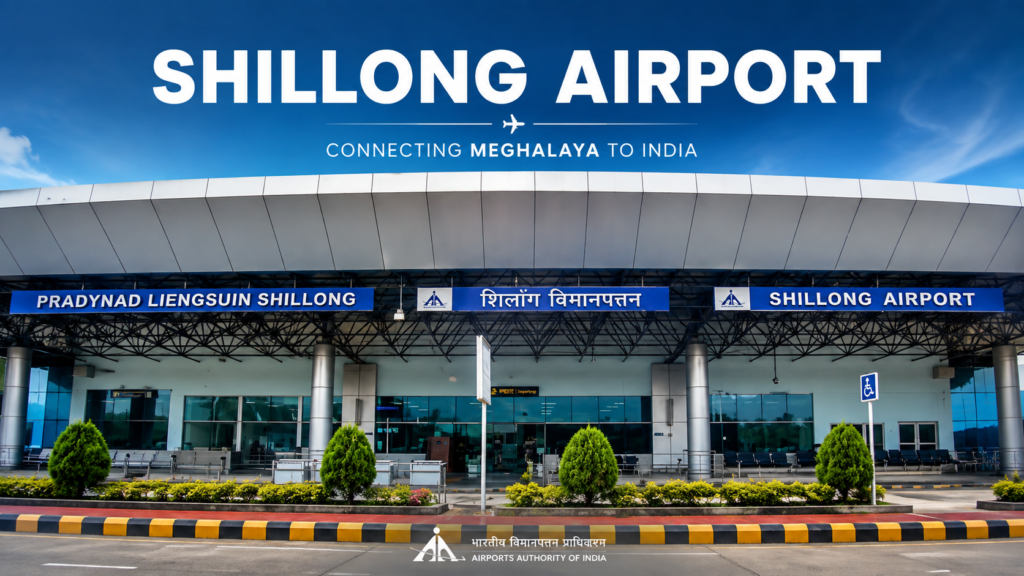
Airport History
Shillong Airport, formerly known as Umroi Airport, is located at Umroi, approximately 30 km northeast of Shillong, the capital of Meghalaya. The airport was originally established to improve air connectivity to the hilly northeastern region of India, where road travel is often challenging due to the terrain.
Initially developed as a small regional airport, Shillong Airport handled limited operations because of its short runway and operational constraints. To improve accessibility, the Airports Authority of India (AAI) undertook infrastructure upgrades, including runway extension, apron expansion, and installation of modern air navigation facilities.
The airport has been developed under the Government of India’s Regional Connectivity Scheme (UDAN), enabling scheduled commercial services to key cities. Although operational limitations continue due to the surrounding hills and weather conditions, Shillong Airport remains Meghalaya’s primary aviation gateway and an important contributor to the state’s tourism and economic development.
Airport Overview
Shillong Airport is a domestic airport owned and operated by the Airports Authority of India (AAI). Situated amidst the scenic Khasi Hills, it serves as the principal air gateway to Meghalaya and supports both business and leisure travel.
The airport connects Meghalaya with major Indian cities through scheduled regional services. Due to terrain-related operational restrictions, aircraft operations are primarily limited to turboprop aircraft, making it one of India’s more specialized regional airports.
Shillong Airport plays a significant role in promoting tourism to destinations such as Shillong, Cherrapunji (Sohra), Mawlynnong, Dawki, and the Living Root Bridges. It also supports government travel, regional commerce, education, and healthcare accessibility for the state.
Airport Snapshot
| Parameter | Details |
| Airport Name | Shillong Airport |
| Former Name | Umroi Airport |
| IATA Code | SHL |
| ICAO Code | VEBI |
| Airport Type | Domestic Airport |
| Owner | Airports Authority of India (AAI) |
| Operator | Airports Authority of India (AAI) |
| Location | Umroi, Ri Bhoi District, Meghalaya |
| Elevation | Approximately 887 metres (2,910 ft) |
| Passenger Terminals | 1 |
| Runways | 1 |
| Runway Number | 04/22 |
| Runway Length | Approximately 1,829 metres |
| Runway Surface | Asphalt |
| Commercial Operations | Regional scheduled passenger services |
| Primary Catchment | Shillong, Ri Bhoi, East Khasi Hills, West Khasi Hills, Jaintia Hills and adjoining regions of Meghalaya |
| Major Airlines | IndiGo, Alliance Air (subject to seasonal and schedule changes) |
Market Intelligence
Shillong Airport serves one of India’s fastest-growing tourism markets. Meghalaya has witnessed consistent growth in domestic tourism, driven by attractions such as Shillong, Cherrapunji (Sohra), Dawki, Mawlynnong, Laitlum Canyons, and numerous eco-tourism destinations.
The airport primarily caters to government officials, business travelers, students, tourists, and residents of Meghalaya. Passenger demand increases significantly during holiday seasons, cultural festivals, and peak tourism months.
While the airport currently has limited commercial infrastructure compared to larger metro airports, increasing tourist arrivals and regional economic growth present opportunities for retail outlets, food and beverage services, car rentals, hospitality partnerships, and passenger-focused amenities.
For advertisers, Shillong Airport offers access to a high-value audience comprising domestic tourists, government officials, educational travelers, and premium leisure visitors. Brands in tourism, hospitality, banking, education, automobiles, telecom, and consumer goods can benefit from targeted airport advertising as passenger traffic continues to grow.
SirriS Intelligence Summary
Shillong Airport is the primary aviation gateway to Meghalaya and plays a vital role in enhancing the state’s connectivity, tourism, and regional economic development. Although it is a relatively small domestic airport, its strategic location makes it indispensable for connecting Meghalaya with major Indian cities.
The airport benefits from Meghalaya’s growing tourism sector, increasing government investment in regional connectivity, and rising demand for faster transportation. Its catchment area includes not only Shillong but also several districts across Meghalaya, making it an important transportation hub for residents, businesses, educational institutions, and government agencies.
Operationally, Shillong Airport faces challenges due to its hilly terrain, weather conditions, and runway limitations, which currently restrict the type of aircraft that can operate. However, any future runway extension or infrastructure enhancement could significantly improve passenger capacity, airline connectivity, and overall operational efficiency.
From an infrastructure perspective, the airport offers opportunities for gradual expansion of passenger amenities, commercial services, and aviation-related facilities as traffic continues to grow. Continued government support under regional connectivity initiatives is expected to strengthen its role within the northeastern aviation network.