Airport History
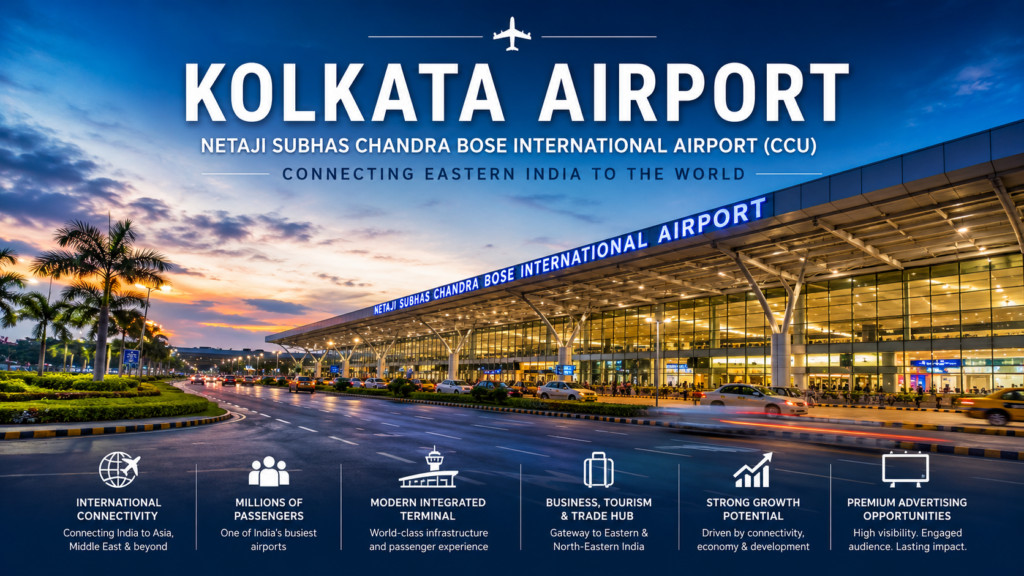
Netaji Subhas Chandra Bose International Airport (NSCBI Airport) is one of India’s oldest and most historically significant airports. Established during the British colonial era as the Dum Dum Aerodrome in the early 1920s, the airport initially served military and civil aviation operations. Over the decades, it evolved into Eastern India’s primary aviation hub, playing a vital role in connecting Kolkata with domestic and international destinations.
Following India’s independence, the airport underwent continuous modernization to accommodate growing passenger traffic and larger aircraft. In 1995, it was officially renamed Netaji Subhas Chandra Bose International Airport in honour of the renowned Indian freedom fighter. A major milestone in its development was the commissioning of the integrated passenger terminal (Terminal 2) in 2013, transforming the airport into a modern international gateway with enhanced passenger amenities, advanced operational systems, and increased handling capacity.
Today, the airport is managed by the Airports Authority of India (AAI) and serves as the principal gateway to Eastern and North-Eastern India, while also supporting international connectivity to Southeast Asia, the Middle East, and neighbouring countries.
Airport Overview
Netaji Subhas Chandra Bose International Airport is an international airport located in Kolkata, the capital of West Bengal. It serves as one of India’s busiest airports and is a major hub for passenger and cargo movement in Eastern India. Strategically positioned near the Bangladesh, Nepal, and Bhutan borders, the airport plays a crucial role in regional connectivity, trade, tourism, and economic development.
The airport operates both domestic and international flights, connecting Kolkata with over 60 destinations across India and abroad. It is a key operating base for airlines such as IndiGo, Air India, Akasa Air, SpiceJet, and Air India Express, while several international carriers connect Kolkata with destinations across Asia and the Middle East.
With its modern integrated terminal, advanced cargo facilities, and continuous infrastructure upgrades, the airport has emerged as one of India’s leading aviation gateways. It also serves as an important centre for business travel, government movement, medical tourism, education, and cultural exchange, supporting the diverse economic landscape of Eastern India.
Airport Snapshot
| Parameter | Details |
| Airport Name | Netaji Subhas Chandra Bose International Airport |
| IATA Code | CCU |
| ICAO Code | VECC |
| Airport Type | International Airport |
| Owner | Airports Authority of India |
| Operator | Airports Authority of India (AAI) |
| Location | Kolkata, West Bengal |
| Elevation | Approximately 5 metres (16 ft) |
| Passenger Terminals | 1 Integrated Terminal (T2) |
| Runways | 2 |
| Runway Numbers | 01L/19R & 01R/19L |
| Longest Runway Length | Approximately 3,627 metres |
| Runway Surface | Asphalt |
| Commercial Operations | Domestic and International |
| Primary Catchment | West Bengal, North-East India, Jharkhand, Bihar, Odisha, Bangladesh (cross-border travellers) |
| Major Airlines | IndiGo, Air India, Air India Express, Akasa Air, SpiceJet, Emirates, Singapore Airlines, Thai Airways, Biman Bangladesh Airlines, Qatar Airways and other international carriers |
Market Intelligence
Netaji Subhas Chandra Bose International Airport is the largest aviation hub in Eastern India and serves one of the country’s most economically and culturally significant regions. The airport’s extensive catchment area includes West Bengal, the North-Eastern states, parts of Bihar, Jharkhand, Odisha, and a considerable number of cross-border travellers from Bangladesh. This broad passenger base enables the airport to maintain consistently high traffic volumes throughout the year and reinforces its position as a strategic gateway for both domestic and international travel.
The airport supports a diverse mix of passenger segments, including business executives, government officials, tourists, students, medical travellers, migrant workers, and international visitors. Kolkata’s status as a commercial, financial, educational, healthcare, and cultural centre generates strong year-round travel demand, while major festivals such as Durga Puja, Kali Puja, Christmas, and the winter holiday season contribute to significant peaks in passenger traffic. International connectivity to Southeast Asia, the Middle East, and neighbouring countries further strengthens the airport’s role in facilitating trade, tourism, and regional economic integration.
From a commercial perspective, the airport offers one of the strongest advertising markets among AAI-operated airports. High passenger volumes, a modern integrated terminal, extended passenger dwell times, premium retail spaces, and a balanced mix of business and leisure travellers create excellent opportunities for airport advertising. Brands from sectors such as banking, automobiles, consumer electronics, real estate, hospitality, education, healthcare, tourism, and luxury retail can effectively engage affluent and decision-making audiences within the airport environment. Continuous infrastructure investments and increasing passenger demand are expected to further enhance the airport’s commercial value in the coming years.
SirriS Intelligence Summary
Netaji Subhas Chandra Bose International Airport is classified by SirriS as a Tier-1 Strategic International Airport and one of the most commercially significant airports in India’s airport network. Its role as the principal aviation gateway to Eastern and North-Eastern India, combined with strong domestic and international connectivity, positions it as a high-priority airport for aviation, infrastructure, and Out-of-Home (OOH) media stakeholders.
The airport’s large and diverse passenger base, modern infrastructure, and strategic geographic location create sustained opportunities for commercial partnerships, premium advertising, retail expansion, and passenger engagement initiatives. Its integrated terminal provides multiple high-visibility advertising locations with extended audience exposure, making it particularly attractive for national brands, multinational corporations, financial institutions, tourism boards, and government campaigns. The airport also benefits from consistent year-round passenger movement driven by business travel, tourism, education, healthcare, and regional commerce, reducing seasonal demand fluctuations.
From the SirriS perspective, Kolkata Airport demonstrates strong long-term growth potential supported by continuous infrastructure development, increasing airline connectivity, expanding international services, and sustained economic growth across Eastern India. It should be regarded as a high-value commercial aviation asset, offering excellent opportunities for airport media, concession businesses, retail operators, and aviation-related investments. Its strategic importance, robust passenger profile, and mature commercial ecosystem make it one of the most attractive airports in India for long-term business development and advertising investments.